
International trade is rapidly growing, and businesses in Nepal are increasingly reaching customers across the globe. From handicrafts and carpets to garments, herbs, tea, and coffee, Nepali products have strong demand in international markets. However, for many exporters and business owners, understanding how shipping from Nepal to the world works can be confusing. Because Nepal is a landlocked country, international logistics involves a combination of air freight, land transport, and sea shipping through neighboring countries. With the right logistics partner and proper export knowledge, businesses can easily ship goods from Nepal to global destinations. This comprehensive guide from Namaste Cargo Nepal explains everything businesses need to know about international cargo shipping from Nepal, including shipping methods, documentation, costs, and expert tips for smooth global deliveries. Nepal's export sector has shown remarkable resilience and growth, with a 77.8% increase in the first eleven months of FY 2024/25, driven primarily by soybean oil exports to India. Overall, exports in 2024 totaled $1.24 billion, with a year-on-year growth of 2.4%. This upward trajectory reflects improved trade policies and increasing global demand for Nepali goods. Major industries fueling this growth include handicrafts, carpets, garments, herbs, tea, and coffee. Soybean oil leads at 12.2% of total exports ($155.2 million), followed by coffee, tea, and spices at 8.4% ($106.8 million), and textile floor coverings like carpets at 7.8% ($98.6 million). These sectors employ thousands and leverage Nepal's rich cultural heritage and natural resources, making them staples in Nepal export logistics. Despite being landlocked, Nepal has developed strong logistics networks to support global trade. Most cargo shipments are transported through Tribhuvan International Airport in Kathmandu for air freight or through Indian seaports such as Kolkata and Visakhapatnam for sea freight. Freight forwarding companies like Namaste Cargo Nepal play an essential role by managing logistics, documentation, customs clearance, and international delivery. With the right cargo partner, businesses can ship goods worldwide efficiently and safely. Businesses exporting goods from Nepal typically choose from three main shipping options: air freight, sea freight, and international courier services. Each method has advantages depending on the shipment size, urgency, and budget. Air freight is the fastest and most reliable international shipping option from Nepal. It is commonly used for urgent shipments, valuable products, and lightweight cargo. Most air cargo shipments depart from Tribhuvan International Airport, which connects Nepal to major global cargo hubs. Advantages of air freight Fast delivery times (usually 3–7 days internationally) Secure transportation for valuable goods Ideal for small and medium shipments Reliable schedules and tracking systems Air freight is commonly used to ship Nepali exports such as handicrafts, garments, herbal products, and high-value items to countries like the USA, Germany, the UK, Japan, and Australia. However, air cargo is generally more expensive than sea freight, so it is best suited for time-sensitive shipments. Sea freight is the most economical option for large or heavy cargo shipments. Since Nepal does not have its own seaport, cargo is transported by road or rail to Indian ports before being shipped overseas. The main ports used for Nepalese exports are Kolkata Port & Visakhapatnam Port. From these ports, cargo can be shipped worldwide using international container shipping routes. Advantages of sea freight Lower shipping costs for bulk cargo Suitable for heavy or large-volume shipments Ideal for commercial and industrial exports Container shipping options (FCL and LCL) Businesses exporting large quantities of carpets, garments, or manufacturing products often choose sea freight due to its cost efficiency. The main drawback is the longer transit time, which may range from 25 to 45 days depending on the destination. Courier services are ideal for small parcels, documents, samples, and e-commerce shipments. Express shipping services offer quick international delivery with full tracking. Courier shipping is commonly used for product samples for international buyers, online orders from global customers, important documents and contracts. Express shipments usually take 3–6 days to reach most international destinations, making them a popular option for small businesses and exporters testing new markets. Nepal exports products to many regions around the world. Some of the most common destinations for international cargo include: European countries are major buyers of Nepali handicrafts, carpets, and pashmina products. Popular export destinations include Germany, United Kingdom, France, Netherlands & Italy. Shipping to Europe is commonly done via air freight for faster delivery or sea freight for large commercial shipments. North America is one of the largest markets for Nepali exports. Businesses frequently ship handmade crafts, wool products , jewelry and decorative items & herbal products. Air freight is usually the preferred shipping option because it reduces transit time and ensures faster customs clearance. These markets are growing rapidly for Nepali exporters, particularly in the handicraft and textile sectors. Because of the long distance, shipments are typically handled through air cargo services for faster delivery. Countries such as the UAE, Qatar, and Saudi Arabia are important trading partners for Nepal. Many businesses ship garments, carpets, and commercial goods to this region. Due to strong airline connections, air cargo to the Middle East is both fast and affordable. Proper documentation is essential for successful international shipping. Exporters must prepare several documents before cargo can be shipped overseas. The most common export documents include: Commercial Invoice: This document contains details about the goods being exported, including value, quantity, and buyer information. Packing List: A packing list describes how the cargo is packaged and provides details about weight and dimensions. Certificate of Origin: This document confirms that the goods were produced or manufactured in Nepal. Export License: Certain products may require export permission from government authorities. Customs Declaration: This document is submitted to customs officials for export clearance. Airway Bill or Bill of Lading: These are shipping documents issued by the airline or shipping company confirming the cargo shipment. Working with a professional freight forwarder helps ensure that all documentation is correctly prepared to avoid delays. The customs clearance process ensures that exported goods comply with national regulations. Understanding the process helps businesses avoid unnecessary delays. The typical export process includes the following steps: 1. Cargo Booking 2. Documentation Submission 3. Customs Inspection 4. Export Clearance Approval 5. Cargo Dispatch Experienced cargo companies manage these procedures to ensure shipments move smoothly. The cost of international cargo shipping depends on several factors. Businesses should understand these elements to estimate shipping expenses accurately. Weight and Volume Shipping Method Destination Country Customs Duties and Taxes Packaging Requirements Cargo Insurance Working with a reliable freight forwarder helps businesses find the most cost-effective shipping options. Proper packaging plays a crucial role in international shipping. Poor packaging can lead to cargo damage, customs issues, or shipping delays. Here are some essential packaging tips for exporters: Use strong and durable packaging materials Protect fragile goods with bubble wrap or foam Label packages clearly with destination and handling instructions Use waterproof packaging for moisture-sensitive products Consider palletizing cargo for large shipments Proper packaging not only protects goods but also ensures compliance with international shipping standards. Selecting a reliable logistics partner is one of the most important decisions for exporters. A professional cargo company can simplify the entire shipping process. Businesses should consider the following factors when choosing a freight forwarder: Industry Experience Global Network Door-to-Door Service Customs Support Competitive Pricing At Namaste Cargo Nepal, businesses can access reliable international shipping services with professional logistics support. International shipping opens new opportunities for businesses in Nepal. With access to global markets, companies can expand their customer base and increase revenue. Key benefits include: Access to international customers Increased sales and revenue growth Global brand recognition Opportunities for e-commerce exports Stronger international business partnerships By exporting products worldwide, Nepali businesses can grow beyond local markets and compete globally. The future of cargo shipping from Nepal looks promising. Several developments are expected to improve the country’s international logistics infrastructure. Key trends include: Growth in global e-commerce exports Improved cargo handling facilities Expansion of digital freight management systems Government initiatives to promote exports Increased international airline cargo routes As global trade continues to expand, Nepali businesses will have even more opportunities to reach international markets.Overview of Nepal’s International Shipping Industry
Types of Cargo Shipping from Nepal
1. Air Freight from Nepal
2. Sea Freight via India
3. International Courier and Express Shipping
Popular International Shipping Destinations from Nepal
Europe
United States and Canada
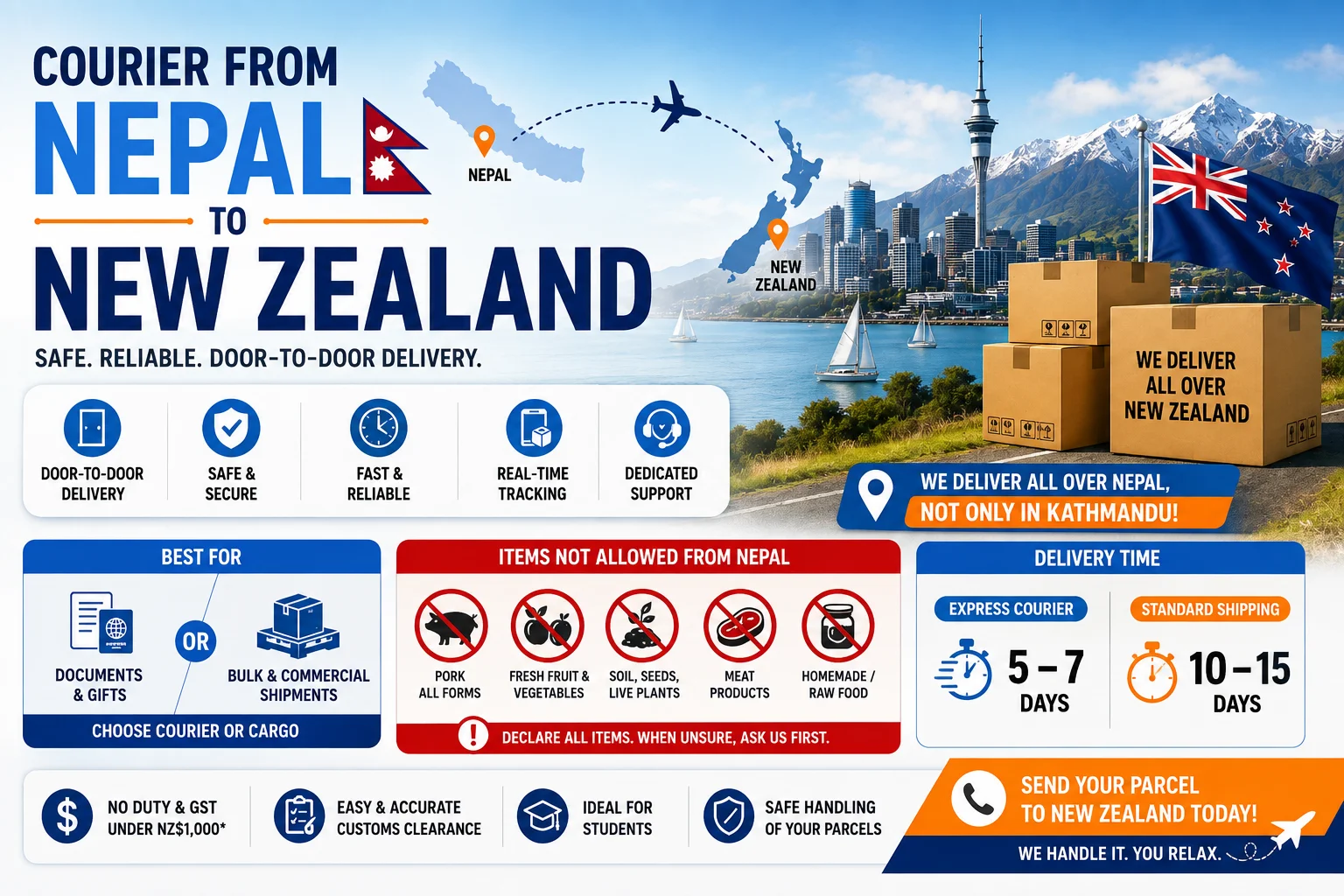
Australia and New Zealand
Middle East
Export Documentation Required in Nepal
Customs Clearance Process in Nepal
The exporter books shipping with a freight forwarder or cargo company.
All export documents are submitted for verification.
Customs authorities may inspect the cargo to confirm the shipment details.
Once verified, customs grants approval for international shipment.
The cargo is transported to its destination via air or sea.Shipping Cost Factors from Nepal
Air freight costs are often calculated based on either actual weight or volumetric weight.
Air cargo is faster but more expensive, while sea freight is slower but more economical.
Shipping costs vary depending on distance and logistics networks.
Import duties in the destination country may affect overall shipping costs.
Special packaging for fragile or sensitive goods can increase costs.
Insurance protects shipments against damage or loss during transit.Packaging and Cargo Handling Tips for Businesses
Choosing the Right Cargo Company in Nepal
Look for companies with strong expertise in international cargo shipping.
A cargo company with international partners ensures smoother global deliveries.
This service simplifies logistics by handling pickup, shipping, and final delivery.
Experienced logistics providers help manage export documentation and customs clearance.
Transparent pricing helps businesses manage shipping budgets effectively.Benefits of Global Shipping for Nepali Businesses
Future of International Cargo from Nepal
Conclusion
Shipping from Nepal to international markets is becoming easier and more efficient as logistics infrastructure improves. Whether businesses choose air freight, sea freight, or courier shipping, understanding the export process is essential for successful global trade. From preparing export documentation to selecting the right shipping method, each step plays an important role in ensuring smooth international deliveries. By partnering with a reliable logistics provider like Namaste Cargo Nepal, businesses can simplify the entire shipping process and focus on growing their international presence. As global demand for Nepali products continues to rise, businesses that embrace international cargo shipping will be well positioned to expand and succeed in the global marketplace.
Send packages worldwide with trusted courier services in Nepal offering quick delivery, safe handlin...
Namaste Cargo Nepal makes international shipping simple, fast, and affordable. Send documents, parce...
Looking for a reliable Nepal courier service? Discover why Namaste Cargo Nepal is the top choice for...